
Cybrid Technologies Sees Q3 Surge: Lithium Battery Materials Up 85%, Consumer Electronics Up 77%
Cybrid Technologies Inc. (Shanghai Stock Code: 603212) has released its Q3 2025 report, showcasing significant momentum across its diversified non-PV business lines and reinforcing the success of its platform-based growth strategy. Non-PV Business Growth Accelerates During the quarter, Cybrid’s non-photovoltaic segments delivered standout performance: Non-PV revenue accounted for 28.6% of total sales, up 6.3 percentage points from last year, signaling a more balanced and resilient business mix. Total Q3 revenue reached RMB 687 million, supported by a solid RMB 98.77 million in net operating cash flow, up 17.6% from Q2. PV Film Business Continues to Lead Cybrid’s photovoltaic materials segment delivered strong results: Production sites in China and Vietnam ran at full capacity, supporting global customers with consistent output and reinforcing Cybrid’s leadership in PV encapsulant solutions. Expanding Global Reach The company’s Vietnam base continues to bolster overseas markets including India, the EU, Japan, Turkey, Vietnam, and Taiwan. Excluding backsheet products: This reflects strong execution of Cybrid’s globalization strategy. Innovation at the Center Innovation remains Cybrid’s primary growth driver: The company continues to partner with downstream PV leaders, offering integrated perovskite solutions that include encapsulants, light conversion films, and moisture-barrier materials. Cybrid’s technological strength earned it a place among the PVBL 2025 Global Top 100 PV Brands. Diversified Growth: Three Non-PV Segments on the Rise 1. Lithium Battery & New Energy Materials A standout growth engine for Q3: High-performing products include blue films for cells, CCS and side insulation films, automotive adhesive tapes, and puncture-resistant materials. Participation in events like CIBF 2025 strengthened Cybrid’s influence and industry partnerships. Looking ahead, Cybrid will expand FFC/FCC encapsulants, high-shear blue films, and other next-gen materials to maintain strong upward momentum. 2. Consumer Electronics Materials The consumer electronics division continued its rapid ascent: Growth was led by OLED protective films and acoustic diaphragm materials. Ongoing R&D focuses on OLED adhesive innovations, MicroLED carrier adhesives, and materials for emerging solid-state battery designs. 3. Semiconductor Materials The semiconductor materials segment posted steady expansion: Core products such as UV debonding tapes maintained market strength, while CMP fixing tapes entered mass production. New materials — including QFN films, MiniLED UV piercing films, and metal heat sinks for power modules — are advancing through customer validation and testing. Strengthening R&D, Talent, and Innovation Infrastructure Under its core philosophy, “Innovation Creates Value,” Cybrid continues to invest heavily in national-level R&D platforms and advanced research institutes. Several initiatives have been recognized in major provincial and municipal tech programs. The Cybrid Innovation Academy focuses on cultivating talent and applying AI to accelerate materials research. Collaborative programs with universities like Soochow University further support commercialization of frontier technologies. Looking Forward Cybrid Technologies aims to deepen its expertise in core polymer materials, leverage global market opportunities, and drive long-term sustainability through continuous innovation. With technology as its engine and globalization as its foundation, the company is positioning itself as a world-class supplier of functional polymer material solutions.
UNIST Researchers Develop Gel Electrolyte That Nearly Triples EV Battery Life
A team of researchers at UNIST has unveiled a breakthrough gel-like material that could dramatically extend the lifespan and safety of high-voltage electric vehicle (EV) batteries. The novel electrolyte prevents the formation of reactive oxygen species (ROS)—the main driver of battery aging—boosting battery life by 2.8 times and reducing swelling by one-sixth. The innovation comes from an anthracene-based semi-solid gel polymer electrolyte (An-PVA-CN), which directly blocks ROS formation during high-voltage charging. Unlike previous approaches that neutralized ROS after they formed, this material prevents ROS at the source, ensuring longer-lasting, safer batteries. High-voltage lithium-ion batteries (LIBs) store more energy but also risk destabilizing oxygen in nickel-rich cathodes, leading to ROS generation, gas buildup, and shorter lifespans. The new electrolyte addresses these challenges in two ways: the anthracene component captures unstable surface oxygen, while a nitrile (-CN) group stabilizes the cathode’s nickel metal structure. In testing, batteries with this electrolyte retained 81% of their capacity after 500 charge-discharge cycles at 4.55V, compared to conventional batteries dropping below 80% after just 180 cycles. Swelling was also drastically reduced, with expansion limited to 13 micrometers, versus 85 micrometers in standard cells—a nearly sixfold improvement. Professor Hyun-Kon Song, leading the research, noted, “This study shows oxygen reactions in high-voltage batteries can be controlled at the electrolyte design stage. The same principle could enable lightweight batteries for aerospace and large-scale energy storage applications.” The research, a collaboration with Dr. Seo-Hyun Jung (KRICT) and Dr. Chihyun Hwang (KETI), was published online in Advanced Energy Materials on October 5, 2025, and supported by UNIST’s InnoCore program, KEIT, and KRICT.
Toyota Opens $13.9B North Carolina Battery Plant, Adds $10B to U.S. Investment Plan

LIBERTY, N.C. — Toyota has officially launched production at its new $13.9 billion battery manufacturing plant in North Carolina, a major expansion of the automaker’s U.S. manufacturing operations and a cornerstone of its electrification strategy. Alongside the plant’s opening, Toyota announced an additional $10 billion investment in its U.S. operations over the next five years, bringing its total investment in the country to nearly $60 billion since it began operating in the U.S. nearly 70 years ago. The 1,850-acre facility in Liberty is Toyota’s first battery manufacturing plant outside Japan. Once fully operational, it will produce up to 30 gigawatt-hours of lithium-ion batteries annually, supplying the company’s lineup of hybrid, plug-in hybrid, and fully electric vehicles. “Today’s launch of Toyota’s first U.S. battery plant and our expanded investment represent a pivotal moment in our company’s history,” said Ted Ogawa, CEO of Toyota Motor North America. “This facility underscores Toyota’s long-term commitment to U.S. manufacturing, innovation, and the communities where we operate.” The plant is expected to create up to 5,100 new jobs and features 14 production lines that will build batteries for the Camry HEV, Corolla Cross HEV, RAV4 HEV, and Toyota’s first U.S.-built all-electric three-row SUV. Additional production capacity is planned by 2030 as demand for electrified vehicles continues to rise. In addition to manufacturing, the site will include a range of amenities designed to support workers, including childcare services, a medical clinic, pharmacy, and fitness center. U.S. Transportation Secretary Sean Duffy praised the investment, calling it a sign of confidence in American manufacturing. “Under President Donald Trump’s leadership, America is open for business,” Duffy said in a statement. “Toyota’s expansion will create thousands of good-paying jobs and inject billions into the U.S. economy.” Toyota’s North Carolina facility is part of the company’s broader strategy to expand electric and hybrid production capacity worldwide, reflecting growing consumer demand and tightening global emissions standards.
Carmaker Tests Radical Battery “Ejection” System to Combat EV Fire Risks

A Chinese automaker has unveiled a controversial new safety feature designed to tackle one of the electric vehicle industry’s biggest fears — battery fires — by quite literally launching the battery out of the car. Battery Ejection as a Fire Safety Measure In a demonstration shared by the China Vehicle Collision Repair Technical and Research Centre, a prototype vehicle from FAW’s Bestune brand was shown rapidly ejecting its battery pack from the side of the car. According to the research centre, the system is intended to prevent catastrophic fires caused by “thermal runaway” — a reaction where an overheating battery cell ignites or spreads heat to other cells. By ejecting the entire pack, the car could, in theory, protect passengers and limit damage to the vehicle’s structure. The system functions in a similar way to airbags, using small explosive charges to deploy the mechanism at high speed. An Unconventional Solution Bestune, a sub-brand of the state-owned FAW Group, has already gained attention for its battery-swapping technology, allowing drivers to exchange depleted packs for charged ones in minutes at dedicated stations. Its NAT model was the first to integrate with the Evogo swapping network, where users can rent battery modules as needed. However, this latest “ejection” concept has raised eyebrows across the motoring world. While it aims to improve safety, experts warn that propelling a several-hundred-kilogram battery out of a moving car could pose serious risks to bystanders. Social media reactions to the demonstration were swift, with one commenter asking, “Are we trying to kill pedestrians instead of protecting drivers?” According to the video’s original poster, the system would only activate under controlled conditions — specifically, when there’s at least six metres of clear, flammable-free space beside the vehicle. Expert and Industry Reactions Australian road safety advocate Peter Khoury of the NRMA dismissed the concept as impractical and unsafe. “EV battery fires are very rare, but ejecting a battery out of the vehicle like a cannon is not the solution,” he said.“In the unlikely event of a fire, the safest course is to exit the vehicle, call emergency services, and stay clear.” No EVs currently sold in Australia feature either battery-swapping or ejection systems, and it’s unlikely such a prototype would pass local safety regulations in its current form. Broader EV Safety Concerns The demonstration arrives amid heightened scrutiny of EV safety in China. Regulators have recently considered banning flush, power-operated door handles after several incidents where electronic faults trapped occupants inside during emergencies. In one case, door handle motors froze following a short circuit, preventing rescue attempts during a fire. During heavy rains in Guangdong, similar electrical faults forced passengers to break windows to escape. As EV technology advances, manufacturers are experimenting with increasingly creative — and sometimes risky — solutions to improve safety. FAW’s ejection system may never reach production, but it underscores how far automakers are willing to push innovation to manage the complex challenge of battery safety.
Rice University’s “Recharge-to-Recycle” Reactor Turns Battery Waste into Fresh Lithium Feedstock
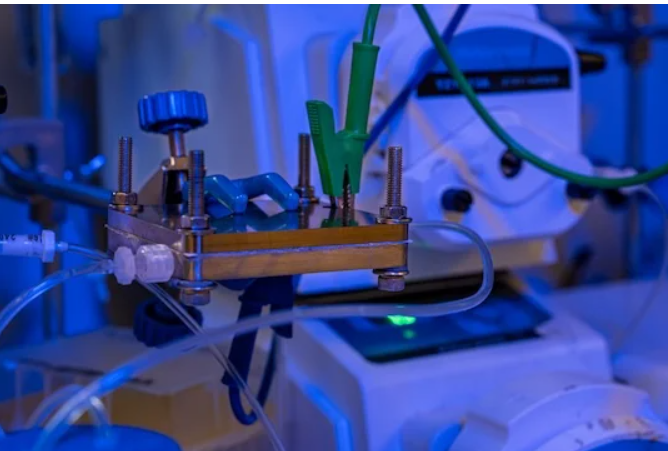
As electric vehicles surge worldwide, used battery packs are fast becoming one of the largest—and most valuable—waste streams. Extracting lithium from old batteries is notoriously expensive and energy-intensive, with most recycling methods relying on high-temperature smelting or aggressive acid leaching to produce lithium carbonate that still needs additional conversion into lithium hydroxide for reuse. Researchers at Rice University have unveiled a new “recharge-to-recycle” reactor that flips this process on its head—literally. Instead of breaking down spent materials with chemicals, the system recharges them to extract lithium directly in the form manufacturers actually need: battery-grade lithium hydroxide. “We asked a basic question: If charging a battery pulls lithium out of a cathode, why not use that same reaction to recycle?” said Sibani Lisa Biswal, chair of Rice’s Department of Chemical and Biomolecular Engineering. “By pairing that chemistry with a compact electrochemical reactor, we can separate lithium cleanly and produce the exact salt manufacturers want.” In a conventional battery, charging moves lithium ions from the cathode to the anode. The Rice system applies this same principle to waste cathode materials—such as lithium iron phosphate (LFP)—allowing lithium ions to migrate through a selective membrane into a stream of water. At the same time, the counter electrode splits water to produce hydroxide ions. The lithium and hydroxide combine in the water to form high-purity lithium hydroxide, all without acids, solvents, or extra reagents. Published in Joule, the research describes a zero-gap membrane–electrode reactor that operates using only electricity, water, and shredded battery waste (“black mass”). In one mode, the process consumed just 103 kilojoules of energy per kilogram of waste—roughly ten times less than typical acid-leaching routes, even before accounting for additional refining steps. The team scaled the device to 20 cm², successfully ran it for 1,000 continuous hours, and processed 57 grams of industrial black mass supplied by industry partner TotalEnergies. The system maintained nearly 90% lithium recovery and produced lithium hydroxide that was over 99% pure, suitable for direct reuse in new batteries. “Directly producing high-purity lithium hydroxide shortens the path back into new batteries,” said Haotian Wang, Rice associate professor and co-corresponding author. “That means fewer processing steps, lower waste, and a stronger, more circular supply chain.” The method proved adaptable across multiple chemistries, including LFP, lithium manganese oxide, and nickel-manganese-cobalt (NMC) cathodes. Even more impressively, the team demonstrated roll-to-roll processing of entire LFP electrodes directly from aluminum foil—no scraping, shredding, or chemical pretreatment required. “The roll-to-roll demo shows how this could plug right into automated disassembly lines,” Wang added. “You feed in the electrode, power the reactor with low-carbon electricity, and draw out battery-grade lithium hydroxide.” Next, the Rice team plans to scale up with larger reactor stacks, higher black mass loading, and new hydrophobic membranes designed to sustain efficiency at greater lithium hydroxide concentrations. They’re also targeting posttreatment steps like concentration and crystallization to further cut energy use and emissions. “We’ve made lithium extraction cleaner and simpler,” Biswal said. “Now we see the next bottleneck clearly. Tackle concentration, and you unlock even better sustainability.” Source: Rice University News – “New Recharge-to-Recycle Reactor Turns Battery Waste into New Lithium Feedstock
Toyota’s Solid-State Breakthrough: EV Batteries Built to Last 40 Years
Toyota is gearing up to transform the electric vehicle industry with next-generation solid-state batteries (SSBs) that promise an unprecedented 40-year lifespan and extended driving ranges beyond 621 miles (1,000 km). The automaker plans to bring these advanced batteries to market by 2027–2028, marking a pivotal shift in sustainable EV technology. Quadruple the Lifespan, Smaller Footprint Recent reports suggest Toyota’s SSBs could maintain up to 90% capacity after 40 years, compared to roughly 10 years for today’s lithium-ion batteries. This extraordinary durability means one solid-state unit could replace four conventional batteries over its lifetime—dramatically cutting production emissions and waste. The new design swaps flammable liquid electrolytes for solid materials, enhancing safety, energy density, and charging speed. The result: smaller, lighter battery packs that deliver longer range and faster charging with reduced overheating risks. From Premium to Mainstream Toyota executives say early versions will appear first in premium models such as the Lexus or Century before scaling down to high-volume vehicles like the next-generation Corolla. While initial costs are expected to be high, Toyota anticipates prices will fall as production scales and supply chains mature. With their extended lifespan, solid-state batteries could outlast the vehicles they power, enabling battery-swapping or reuse across multiple cars—potentially two or three times—making the upfront investment more sustainable over time. Strategic Partnerships Driving Innovation Toyota’s progress stems from a deep partnership with Sumitomo Metal Mining, focused on developing robust cathode materials that withstand repeated charge cycles. Leveraging Sumitomo’s advanced powder synthesis technology, the pair has created a high-durability cathode ready for mass production as early as Japan’s 2028 fiscal year. This collaboration aligns with Japan’s broader push to secure a domestic EV battery supply chain, reducing reliance on imports from China and South Korea. Backed by government support, Japanese automakers and suppliers are investing over $7 billion (1 trillion yen) in local battery manufacturing capacity. In parallel, Toyota is working with Idemitsu Kosan, a major oil refiner, to produce lithium sulfide, a key material for SSBs. Idemitsu is building a large-scale facility capable of generating 1,000 metric tons annually, targeting mass production by 2027. Challenges Ahead, Momentum Building Despite significant progress, experts note that mass adoption of solid-state batteries will take time, citing supply constraints, complex manufacturing, and high costs. Still, Toyota’s advances indicate real momentum toward commercial viability, positioning the company at the forefront of next-generation EV power solutions. As the global race for battery innovation intensifies, Toyota’s 40-year solid-state technology could redefine what durability, efficiency, and sustainability mean in the electric era.
BAM Study Flags Safety Gaps in Promising Sodium-Ion Batteries
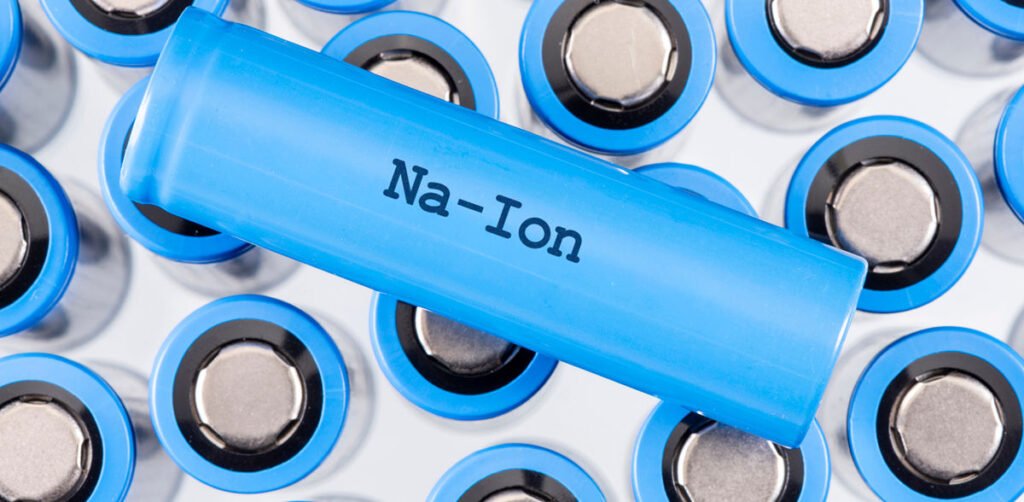
A new study from Germany’s Federal Institute for Materials Research and Testing (BAM) has revealed that sodium-ion batteries — often seen as a sustainable and cost-effective alternative to lithium-ion technology — may require specially designed safety mechanisms before they can be deployed at scale. The research, conducted in collaboration with the European Synchrotron Radiation Facility (ESRF) in France and the Fraunhofer Institute for High-Speed Dynamics (EMI), highlights that proven safety systems used in lithium-ion cells cannot be directly transferred to sodium-based batteries. Instead, they need to be adapted to the chemistry and mechanical design of each new system. Putting Sodium-Ion Safety to the Test To explore how sodium-ion batteries react to damage, researchers performed a nail penetration test — a widely recognized procedure that simulates severe mechanical failure by driving a metal pin through a cell. The test helps determine whether a battery undergoes dangerous thermal runaway reactions, such as overheating, fire, or explosion. Using high-speed X-ray imaging at ESRF’s advanced test facilities in Grenoble, the team captured real-time footage of internal reactions inside the batteries. Three cell types were examined side by side: A Surprising Reaction The study found stark contrasts in performance. The LFP battery remained stable under stress, while the NMC cell’s built-in safety systems functioned as intended. The sodium-ion cell, however, displayed a sudden, near-explosive reaction. Researchers determined that the cause was not the sodium chemistry itself, but rather a failure in the battery’s venting system — the component responsible for releasing excess internal pressure. In this case, the vent became blocked by other safety elements during a rapid pressure buildup, preventing controlled release and triggering a violent rupture. Designing Safety for New Chemistries “Our investigations show that safety mechanisms cannot simply be transferred from one battery technology to another,” said Nils Böttcher, Head of the Battery Test Center at BAM. “For new battery types such as sodium-ion cells, mechanical components like venting systems must be specifically designed and validated.” Böttcher stressed that the findings don’t question the overall safety of sodium-ion batteries, but they underscore the need for integrated safety design — ensuring that chemical, mechanical, and thermal systems are developed in tandem. BAM is now contributing its findings to standardization efforts and international testing protocols aimed at establishing clear safety criteria for sodium-ion technologies. As the race to develop sustainable, lithium-free batteries accelerates, the study serves as a reminder that innovation must go hand in hand with safety engineering — especially when new chemistries promise to power the next generation of energy storage solutions. Source: Chemeurope.com
Penn State Researchers Develop “All-Climate” Battery for Extreme Temperature Performance

A new lithium-ion battery design could solve one of the technology’s most persistent challenges: reliable operation across extreme. Lithium-ion (Li-ion) batteries power everything from smartphones to electric vehicles, but their performance drops sharply outside moderate temperature ranges. In cold climates, capacity and efficiency can plummet; in hot environments, overheating risks and degradation increase. Now, researchers at Penn State University have unveiled an all-climate battery (ACB) that promises stable performance in both extremes. The findings were published November 5 in Joule and mark a potential step forward in making Li-ion systems more adaptable for diverse applications — from renewable energy storage to aerospace systems. Led by Dr. Chao-Yang Wang, professor of mechanical and chemical engineering, the team built on more than a decade of thermal management research to refine how lithium-ion cells handle temperature variation. “Lithium-ion batteries were never meant for the broad range of uses we see today,” said Wang. “They were designed for personal electronics operating around 25 °C. Now they’re powering electric vehicles, data centers, and industrial systems that experience far more demanding environments.” Tackling the Temperature Tradeoff Conventional Li-ion batteries typically require external heating and cooling systems to remain within safe operating limits. These systems add weight, consume energy, and still only allow for consistent performance between roughly –30 °C and 45 °C. Previous attempts to expand this range have faced a tradeoff: improving performance in cold conditions often reduced stability in heat, and vice versa. The Penn State team’s new approach integrates a small internal heating element within the battery itself, while optimizing electrode and electrolyte materials for high-temperature resilience. This combination allows the ACB to self-regulate and maintain stable operation without heavy external systems. “Most researchers have tried to solve both hot and cold performance issues solely through materials,” Wang explained. “By optimizing for high-temperature stability and using internal heating for cold starts, we can overcome the thermal limitations without compromising safety.” Expanding Applications The ability to operate efficiently across extreme climates could open new markets for Li-ion technology. Potential applications include solar farms in desert regions, electric vehicles in cold climates, and space or satellite systems where temperature swings are severe. If further validated, the all-climate design could help reduce the complexity and cost of temperature management in large-scale battery systems — a critical step toward improving both energy efficiency and reliability in future deployments. Source: Mira News – “All-Climate Battery Design Promises Extreme Temp Stability”
Cracking the Code on Lithium Battery Safety

New research reveals hidden risks in solid-state designs — and a path toward safer, longer-lasting batteries. They’re small, powerful, and packed with potential — but lithium batteries still have one explosive problem: dendrites. These tiny, needle-like metal structures can grow inside a battery, short-circuit it, and in the worst cases, cause fires or explosions. Until now, scientists believed they had a solution. Solid-state batteries, especially those using polymer-based electrolytes, were thought to be the ultimate fix — stable, solid, and far less flammable than liquid-based designs. But a team at the Technical University of Munich (TUM) has just discovered something that could change that narrative. Their research shows that dendrites can form not only at the electrodes — where they were expected — but also within the polymer electrolyte itself. That’s the very material meant to prevent these dangerous growths. “Our measurements show that dendrite growth can also occur directly inside the polymer electrolyte — in the very material designed to stop it,” says Fabian Apfelbeck, a physicist pursuing his doctorate at TUM and lead author of the study. This revelation could reshape how scientists approach solid-state battery design. To uncover this hidden process, the TUM team used a nanofocus X-ray technique at the German Electron Synchrotron (DESY) in Hamburg. With an X-ray beam just 350 nanometers wide — roughly 200 times thinner than a human hair — they watched structural changes unfold inside a working battery for the first time. The finding surprised even seasoned researchers. “We’ve long assumed dendrites only grow at the interface between electrode and electrolyte,” explains Prof. Peter Müller-Buschbaum, who leads TUM’s Chair of Functional Materials. “Seeing them form deeper inside the material challenges that assumption completely.” Understanding where dendrites form — and why — is a critical step toward creating safer, longer-lasting, and more efficient solid-state batteries. With this knowledge, researchers can now focus on developing electrolytes that stop internal crystallization before it starts. The study, “Local crystallization inside the polymer electrolyte for lithium metal batteries observed by operando nanofocus WAXS,” was published in Nature Communications in 2025.
Fluoride Revolution: Yonsei University’s High-Voltage Battery Breakthrough

In a major leap for solid-state battery technology, researchers at Yonsei University in South Korea have developed a fluoride-based solid electrolyte that allows all-solid-state batteries (ASSBs) to safely operate beyond the 5-volt barrier — a long-standing challenge in energy storage. Led by Professor Yoon Seok Jung, the team’s innovation could significantly boost both the safety and energy density of next-generation batteries used in electric vehicles and renewable energy systems. Breaking the 5-Volt Limit Conventional solid electrolytes often degrade at high voltages, limiting performance and efficiency. Yonsei’s new material — formulated as LiCl–4Li₂TiF₆ — overcomes this issue with exceptional ionic conductivity and high-voltage stability. Tests show that the electrolyte maintains structural integrity even under demanding conditions, preventing the interfacial degradation that typically hampers solid-state designs. Published in Nature Energy, the research demonstrates how the fluoride composition enables record capacity retention while remaining compatible with cost-effective cathode materials, potentially reducing manufacturing costs. Inside the Science The key lies in the material’s fluoride-rich lattice, which facilitates rapid lithium-ion transport while resisting oxidation. By fine-tuning the ratio of lithium chloride and lithium titanium fluoride, the team achieved conductivity levels that rival those of liquid electrolytes — a milestone rarely seen in solid systems. This stability minimizes side reactions at the electrode interface, allowing batteries to endure thousands of charge cycles without major capacity loss. Implications for Electric Vehicles Higher-voltage, safer batteries are critical to extending EV range and reducing fire risks associated with liquid electrolytes. Yonsei’s design could make solid-state EV batteries both safer and more energy-dense, all while maintaining compatibility with existing production lines — a key factor for large-scale adoption. Industry analysts expect the technology could reach mass-market readiness by the end of the decade, transforming how electric vehicles are powered. Applications Beyond Mobility Beyond transportation, this innovation has major implications for grid-scale energy storage. High-voltage ASSBs could store renewable power more efficiently, supporting the global transition toward sustainable electricity systems. Early lab tests suggest energy densities surpassing today’s lithium-ion batteries, positioning the fluoride electrolyte as a leading candidate for next-generation energy storage platforms. Challenges and Next Steps While the results are promising, scaling production will require cost-effective sourcing of fluoride materials and validation of long-term durability across diverse operating environments. Professor Jung remains optimistic, noting that the team’s design “enhances ionic conductivity, prevents interfacial degradation, and achieves record energy density.” Yonsei University is now developing prototype cells and exploring industry partnerships to accelerate commercialization. A New Benchmark in the Battery Race Global players such as QuantumScape and Solid Power are also pursuing high-energy solid-state systems, but Yonsei’s voltage-stability breakthrough gives it a competitive edge. The innovation reinforces Asia’s growing leadership in battery research and could set a new global standard for high-voltage performance. As the race toward more powerful, safer, and sustainable batteries continues, Yonsei’s fluoride-based electrolyte stands out as a potential cornerstone technology for the electric future.